Your workflow
What actually changes in your routine.
Choose the workflow that makes sense for you.
 Kestrel analyzes
Stars in Lightroom, Darktable, Capture One & more
Sorts by your quality rules
Choose your favorites
Your selections, ready to edit
How It Works
How Kestrel sees your photos.
Kestrel runs a four-stage pipeline that builds objective data about every frame. Step through it — we'll follow one Gambel's Quail.
- 1Group
- 2Detect
- 3Score
- 4Tag
- 5Browse



Northern Cardinal
7 shots



Gambel's Quail
7 shots



Costa's Hummingbird
10 shots
Phase 1 · Group
Your bursts become scenes
Kestrel compares frames to find high-speed bursts and groups them into scenes — so near-identical shots are judged against each other, not against your whole shoot.
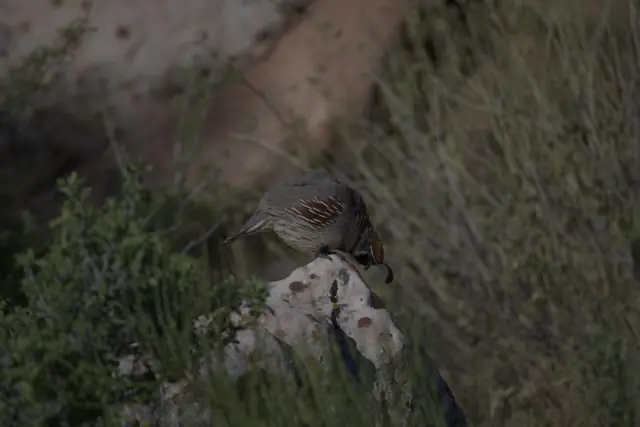
Phase 2 · Detect
Find the bird, ignore the background
An object-detection model locates each bird and segments it from the frame, so a busy or cluttered background never sways the quality score.
The lit shape is Kestrel's actual segmentation mask — only the bird's own pixels feed the quality score.
Sharpness score · sharpest first



Phase 3 · Score
Every frame gets a sharpness score
A machine learning model trained on noise, motion blur and focus gives each frame a normalized score — so the sharpest shot in a burst rises to the top, and the soft ones sink.
Kestrel only focuses on objective quality metrics. It's up to you to decide what pose and lighting you prefer.
Phase 4 · Tag
Each bird gets a species tag
Kestrel labels every photo with a species and family — so you can search your whole library by what's in the frame, not just when you shot it.
Explore Species Search →North American birds for now. Family-level is reliable; treat species as a strong filter, not a definitive ID. Accuracy and coverage keep improving.
Northern CardinalGambel's QuailCosta's Hummingbird American Redstart
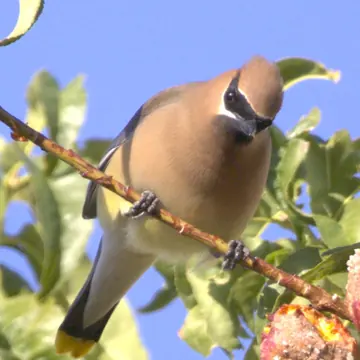 Cedar Waxwing
 Lesser Goldfinch
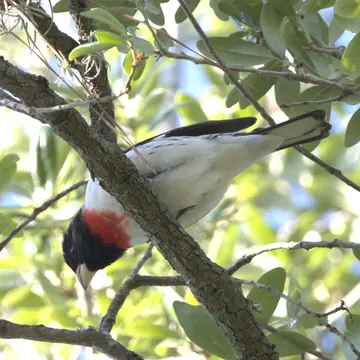 Rose-breasted Grosbeak
 Anna's Hummingbird
Next, You Pick · Browse, Edit, and Share
Your shoot becomes a searchable timeline
Everything before adds up to one browsable outing. Filter by species, open any scene, send your keepers to Lightroom or Capture One — or share the whole story on Perch.
Design Philosophy
Computers can never replace artistic vision.
Project Kestrel is built on the belief that AI should be a cofactor, not a replacement. Kestrel handles the "boring" parts—calculating sharpness and grouping bursts—so you can focus on the artistic decisions: composition, lighting, and story.